
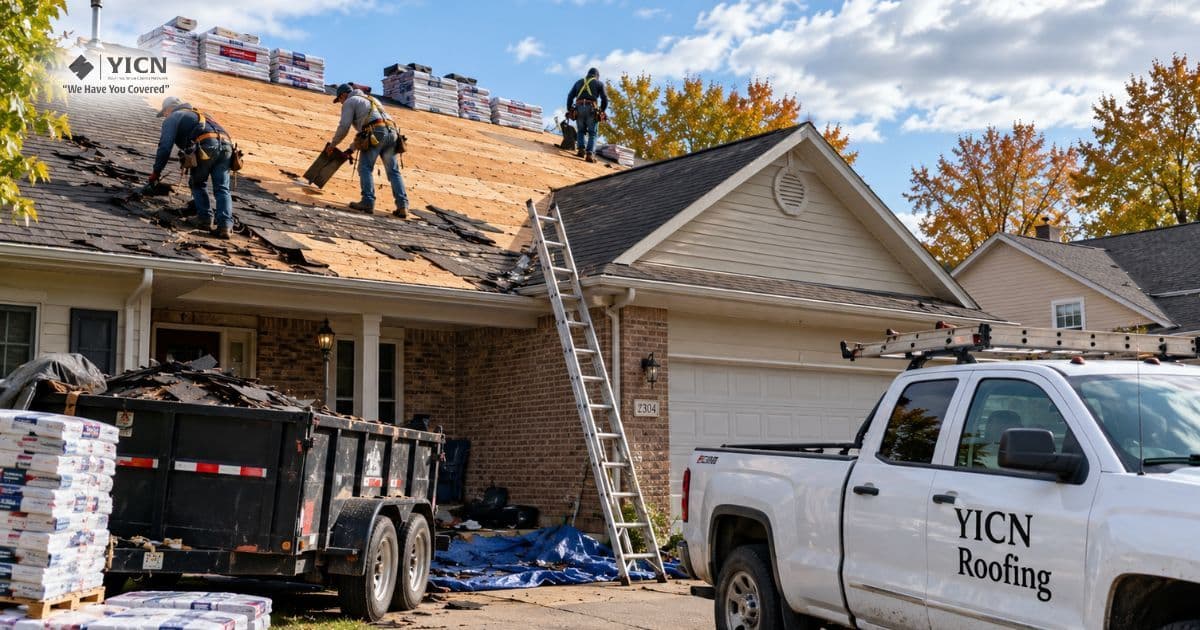
No, it is not too late. That is the short answer for a homeowner in Northeast Ohio staring at a tired roof in late October. The honest answer has three windows, not one. Replace it now, before the ground freezes. Replace it during a winter thaw window using cold-weather installation protocols. Or wait for spring and accept four months of hard exposure in between. Which window is right depends on one thing: the actual condition of the roof, verified by someone who has been up on it. Everything else in this decision flows from that inspection.
Our region averages about 64 inches of snow a season, and the practical outdoor roofing calendar compresses hard after mid November. But "too late" is mostly a myth sold by busy schedules, not by physics. Shingles have a manufacturer threshold for cold-weather installation, crews carry a documented protocol for working below it, and a roof that genuinely cannot survive winter will not care what the calendar says. It will leak on schedule.
Key Takeaways
- It is not too late until snow actually sticks. The pre-freeze window in Northeast Ohio typically runs through mid to late November.
- A healthy roof can wait for spring. A roof that is leaking, shedding shingles, or past its 20 to 30 year service life should not.
- Winter replacement is possible and legitimate: yes, you can replace a roof in the winter, and it is often 10 to 20 percent cheaper than peak season.
- The manufacturer threshold is 40 degrees Fahrenheit. Below it, shingles require hand sealing with asphalt cement instead of relying on the sun.
- Waiting until spring is only safe when the roof is genuinely sound. Freeze-thaw cycles, ice dams, and snow loads do not wait, and a winter leak turns a planned replacement into an insurance claim.
The Calendar Reality in Northeast Ohio
Late October is not late. It is the last comfortable stretch of the fall season, and most replacements scheduled now finish well before the ground freezes between mid November and early December. A typical residential tear-off and reshingle runs one to three working days in fair conditions, and the winter replacement timeline only stretches in December and January.
What the calendar does change is sealing weather. Asphalt shingles activate their self-seal adhesive with warmth and sun, which is why manufacturers draw the line at 40 degrees. Above it, shingles bond on their own over days or weeks. Below it, crews follow a cold-weather protocol: hand sealing each shingle with four spots of asphalt cement, sealing nail heads, and handling brittle material with extra care. GAF documents this threshold in its cool-weather installation guidance, and a competent crew treats it as routine, not as a reason to refuse work.
The Condition Test: Five Signs You Cannot Wait
The condition test matters more than the calendar test. These five findings, confirmed at an inspection, mean the roof should not go through a Northeast Ohio winter as-is:
Active leaks. Water inside the envelope in October becomes ice dam water in January. Interior damage compounds every month the roof waits.
Widespread shingle loss or curling. Large bare patches or wholesale curling means the fastening layer and the seal strip have failed, and freeze-thaw will accelerate it.
End of service life. An asphalt shingle roof that is 20 to 30 years old is at its designed end regardless of how it looks from the driveway.
A soft or spongy deck. Deck rot does not heal over winter. Snow loads near the 20 pounds per square foot design threshold will find every weak spot.
Documented storm damage. Unrepaired storm damage, like the hail from the April 2026 Canton-area storm, tends to worsen with every freeze-thaw cycle, and it complicates a spring insurance claim.
Window One: Replace Now, Before the Ground Freezes
Replacing a roof in late October or early November is the best window when the roof cannot safely wait. The deck is dry, shingles install above the 40 degree threshold and seal in the sun, crews work normal hours, and the new roof enters winter fully cured and bonded. The tradeoff is scheduling: fall is the second-busiest season after summer, so the earlier the call, the better the start date. A roof finished by mid November is simply done, and January becomes a non-event.
Window Two: Replace During a Winter Thaw
Northeast Ohio winters are not a solid block of hardship. Thaw windows with temperatures in the 40s and 50s arrive regularly, even in January, and an experienced crew can complete a replacement inside one. Winter installs follow the manufacturer cold-weather protocol: cleared and dry deck, hand sealing with four spots of asphalt cement per shingle along vulnerable edges, sealed nail heads, and careful handling of cold-brittle material. The bonus is price. Demand dips after the holidays, and many companies, including ours, run off-season pricing 10 to 20 percent below peak. The tradeoffs are a slower pace, shorter daylight, and a roof that finishes its bonding in the first warm days of spring instead of immediately.
Window Three: Wait for Spring, With Eyes Open
Waiting is a legitimate choice for a sound roof. If an inspection confirms the roof is healthy and the wear is cosmetic, spring works, and the budget gets a winter to breathe. But waiting on a failing roof is the expensive version of patience. Freeze-thaw cycles lift more shingles. Ice dams find the gaps, and the average ice dam insurance claim runs 7,000 to 12,000 dollars. Snow load tests the soft deck. Then spring arrives and everyone who waited calls at once, and the backlog pushes start dates into May or June. Our guide on whether to wait until spring walks that tradeoff in detail.
The Cost Picture at a Glance
Fall replacement: peak-adjacent pricing, full sealing, fastest timeline, best conditions.
Winter replacement: typically 10 to 20 percent less, flexible scheduling, protocol labor included, bonding completes in spring warmth.
Spring replacement: full conditions, but the busiest phone lines of the year and four months of winter exposure behind you.
Waiting too long on a failing roof: the most expensive line on any of them, because interior damage, ice dam claims, and emergency tarp calls stack on top of the replacement you were going to buy anyway.
FAQ
Is it too late to replace a roof in November in Ohio?
No. Most years the comfortable window runs through mid to late November, and replacements continue through winter in thaw windows using manufacturer cold-weather protocols.
How cold is too cold for a roof replacement?
Manufacturers draw the line at 40 degrees Fahrenheit for standard installation. Below it, work continues under a hand-sealing protocol rather than stopping entirely.
Can my roof be replaced if it already has snow on it?
Yes, in many cases. The crew clears the snow, verifies the deck is dry, and proceeds if conditions allow. Ice-covered or repeatedly refreezing roofs get rescheduled to the next thaw.
Will a winter roof leak if I wait to replace it until spring?
If it is already leaking, yes, it will get worse. Freeze-thaw cycles and ice dams actively enlarge existing openings through the winter.
Does a late fall roof replacement cost more than summer?
Slightly more than mid-summer shoulder pricing in some cases, but far less than the interior damage a failing roof causes over one untreated winter.
What should I do first if my roof is at the end of its life in October?
Get a free inspection this week. It costs nothing, takes 30 to 40 minutes, and turns a calendar question into a condition answer with photographs.
The Honest Answer
If the roof is sound, no, it is not too late, and it may not even be necessary this year. If the roof is failing, no window is too late to use, including winter ones. YICN Roofing inspects roofs across Northeast Ohio year-round and gives straight answers about which window fits. Call or text (937) 756-2124 for a free inspection before the first snow, or during any thaw window after it.
Frequently Asked Questions
About the Author: Kevin Stone , chairman and founder of YICN Roofing (Your Insurance Claims Network), Northeast Ohio's premier storm damage roofing contractor serving homeowners throughout Bedford Heights and the surrounding 30-mile radius. Operating from the company's headquarters at 5420 Mardale Ave, Bedford Heights, OH 44146, Kevin has transformed YICN Roofing into a top-rated roofing company with an A+ Better Business Bureau score and over 100 satisfied customers who trust his expertise for their most critical roofing needs. Since establishing YICN Roofing, Kevin has built a reputation that extends far beyond traditional roofing services. His comprehensive understanding of the insurance claims process, combined with decades of hands-on roofing expertise, has positioned YICN Roofing as the go-to contractor for Northeast Ohio homeowners facing storm damage, emergency repairs, and comprehensive roof restoration projects. Available 24 hours a day at (937) 756-2124, Kevin ensures that no homeowner in Bedford Heights, Cleveland, Akron, or surrounding communities is left vulnerable to the elements when roofing emergencies strike. Northeast Ohio Roofing Expertise and Regional Understanding Kevin's deep expertise in Northeast Ohio roofing stems from his intimate understanding of the region's unique weather challenges and architectural requirements. The Greater Cleveland area, including Bedford Heights and surrounding communities, faces some of the most demanding weather conditions in the Midwest. Lake-effect snow systems regularly dump heavy loads on residential roofing systems, while spring and summer storms bring devastating wind and hail damage that can compromise even the most well-maintained roofs. Throughout his career, Kevin has personally overseen thousands of roofing projects across Northeast Ohio, from emergency tarping services during severe storms to complete roof replacements for homes damaged by hail, wind, and ice. His experience spans residential neighborhoods in Bedford Heights, where older homes require specialized attention to maintain their architectural integrity, to newer developments in surrounding communities that benefit from modern roofing materials and installation techniques.