
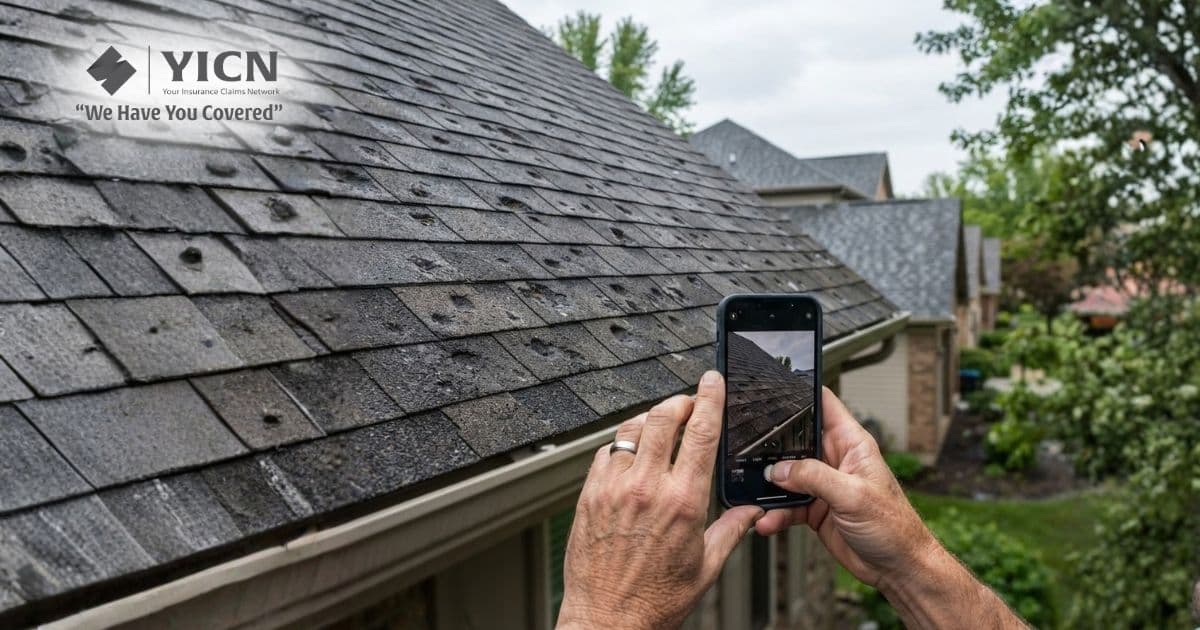
Hear a quick audio overview of Roof Insurance Claims in Ohio: The Complete 2026 Guide.
Roof Insurance Claims in Ohio: The Complete 2026 Guide
A roof insurance claim in Ohio succeeds or fails on three decisions made in the first week: how well you document before anything gets covered or thrown away, whether your contractor is in the room when the adjuster inspects, and how you answer the depreciation question in your policy. Ohio gives you one year from the date of loss to file, and most policies pay for storm damage but not for the wear and tear that let storm damage in. This guide walks the full sequence, from the first photograph to the final supplement.
If a storm damaged your roof, insurance will likely pay most of the repair, but the average homeowner leaves money on the table by skipping documentation, accepting the first adjuster estimate without a contractor present, or missing the recoverable depreciation that the policy owes them.
Key Takeaways
Ohio policies typically require you to file within one year of the date of loss. Some policies are shorter. Check yours before you wait.
Photograph everything before tarps cover it and before any debris leaves the yard.
Have your contractor meet the adjuster on the roof. Claims with a contractor at the inspection get supplement offers far more often than claims without one.
Wind and hail deductibles are usually 1 to 2 percent of dwelling coverage, not a flat dollar amount. On a 250,000 dollar dwelling, that is 2,500 to 5,000 dollars out of pocket before the policy pays anything.
Replacement cost value (RCV) policies pay the full cost of a new roof minus your deductible. Actual cash value (ACV) policies subtract depreciation for age, which on a 15 year old roof can cut the payout by 40 percent or more.
One in 35 homes files a wind or hail claim in a typical year, with an average payout near 13,000 dollars, so this process is common enough to learn before you need it.
Step 1: Confirm What Happened Before You Call Anyone
Insurance pays for sudden, accidental damage from a covered peril: wind, hail, a falling limb, the weight of ice. It does not pay for the curling shingles that were aging quietly for a decade, and adjusters are trained to tell the difference. For the slow-damage side of the line, our guide on whether insurance covers roof leak repair explains where leaks stand. Before you call the carrier, walk the house and the yard with your phone.
Photograph the roof from the ground, the gutters, the downspouts, the yard, and every room with a ceiling stain. Photograph shingles in the grass and dents on the mailbox. If a storm passed through, note the date. In Northeast Ohio, April 2026 brought a hail storm with two inch stones and a microburst with 90 mile an hour winds, and homeowners who tied their claim to that verified event filed cleaner claims than homeowners who guessed at dates. Our Cleveland Heights storm claim guide shows the pattern end to end.
Step 2: Stop Further Damage, But Do Not Throw Away Evidence
Your policy requires you to prevent further damage. Tarp the roof if it is safe, or have a contractor do it, and keep the receipt: reasonable emergency tarping is reimbursable under most policies. What you must not do is start repairs, throw the damaged shingles in a dumpster, or let a crew scrape the evidence before an adjuster sees it. Take photos of everything before the tarp goes on.
Step 3: Read Your Policy for the Three Numbers That Matter
Three lines in your declarations page decide the whole claim. First, the deductible: flat or percentage. Wind and hail deductibles moved to 1 to 2 percent of dwelling coverage on most Ohio policies years ago, which means a 250,000 dollar dwelling carries a 2,500 to 5,000 dollar storm deductible. Second, the valuation clause: replacement cost value or actual cash value. RCV pays what a new roof costs today. ACV pays that number minus depreciation for the roof's age, and a 15 year old architectural shingle roof can see 40 percent or more subtracted for depreciation. Third, the filing deadline: one year from the date of loss is the common Ohio standard, but read your policy, because the words control.
Step 4: File the Claim, Then Schedule the Adjuster Around Your Contractor
Call the carrier or file through the app, and keep every claim number and name. When they offer an adjuster appointment, do not take the first slot. Call a local roofing contractor first and set the inspection for a day both can attend. The adjuster's job is to measure damage against the policy. The contractor's job is to make sure the measurement is complete: every slope, every soft spot, every nail pop, every puncture, the gutters, and the vents. A solo adjuster on a steep roof often inspects from a ladder at the edge, and that is how hail bruising on the back slope gets missed. That contractor presence is the core of how we handle your claim, from first inspection to final supplement.
If your claim involves storm documentation, our guide on documenting roof storm damage for an insurance claim lists exactly what to photograph and in what order.
Step 5: The Adjuster Meeting
Be home for it. Walk the roof with them if you can, or have your contractor do it. Point out every leak stain on the ceilings inside, because interior damage is part of the same claim. Answer questions factually: what you saw, when you saw it, what has changed since. Do not speculate about causes you have not verified. The meeting usually takes under an hour, and the adjuster files the estimate within days. If the estimate comes in low, the claim is not over. Contractors file supplements constantly, and a supplement is not a fight, it is a corrected line item with photographs.
Step 6: Review the Estimate Like a Bid
The adjuster's estimate is written with insurance pricing software, and it will list line items: tear off, underlayment, shingles, flashing, ridge vent, drip edge, ice and water shield in the valleys. Compare it to your contractor's actual bid. If the numbers do not match, the difference is a supplement conversation, not a dispute, and most supplements resolve inside the original claim. If the carrier denies the claim entirely, you have options the denial letter will not volunteer: re-inspection, the appraisal clause in your policy, a public adjuster, or a complaint through the Ohio Department of Insurance.
What the Policy Actually Pays: RCV and ACV
The National Association of Insurance Commissioners explains the split plainly: replacement cost coverage pays to rebuild with like materials at today's prices, while actual cash value subtracts depreciation for age and condition. United Policyholders puts the roof version in one sentence: with ACV, the insurer pays to repair or replace the roof, less your deductible and depreciation for the age and type of roof.
On an RCV policy, the carrier often pays the ACV amount first and releases the difference, the recoverable depreciation, once the work is finished. That structure trips homeowners up every storm season: a first check that looks low is not a lowball, it is the ACV portion, and the rest arrives after completion. The catch: finish the work within the carrier's deadline or the recoverable depreciation can be forfeited. Our roof replacement claim guide walks the math line by line, including repair versus full replacement.
The Denial Question
Denials cluster around the same four reasons: wear and tear or maintenance exclusion, pre-existing damage, a missed filing deadline, or documentation that does not connect the damage to a covered peril. A wear and tear denial is often negotiable when photographs show wind lift or hail bruising on a roof the adjuster called merely old. If your claim is denied, the appeal path is short but sequential: request the denial in writing, get a re-inspection with your contractor present, and escalate to the Ohio Department of Insurance if the position does not move. Our storm damage claim guide covers the full sequence from the contractor side of the table.
How Long It Takes
A straightforward claim with clear storm damage often resolves in two to six weeks: inspection in the first week, estimate in the second, checks after the work is scheduled. Complicated claims, disputed roofs, and storm backlogs stretch longer. The filing deadline does not pause while you negotiate, so file inside the first weeks, not the last ones. And before any of it, the emergency tarping protocol protects the claim you are about to file, because most policies require you to stop further damage.
FAQ
How long do I have to file a roof insurance claim in Ohio?
Most Ohio policies require the claim to be filed within one year of the date of loss, and some are shorter. The date of loss is the storm date, not the date you noticed the leak, which is why tying damage to a verified storm event matters. File early: the clock does not stop for negotiations.
Will filing a roof claim raise my premium?
A single weather-related claim is usually rated as an act of nature and often affects premiums less than people fear, but rates vary by carrier and by claims history. Carrier practice in 2026 is tighter than it was five years ago, so ask your agent to run the numbers before you file if the repair cost is close to your deductible.
Should I get a contractor estimate before filing the claim?
Yes. A contractor inspection before filing tells you whether the damage clears your deductible at all, which prevents you from filing a small claim that gets denied and still shows in your claims history. Most roofers in Northeast Ohio, including us, do this inspection for free.
What does a wind and hail deductible mean on a percentage policy?
The deductible is a percentage of your dwelling coverage, usually 1 to 2 percent for wind and hail. On a 250,000 dollar dwelling that is 2,500 to 5,000 dollars subtracted from the payout before the policy pays a dime. Know the number before the storm, not after.
Can a roofing contractor negotiate with my insurance company?
A contractor cannot legally negotiate the claim the way a public adjuster can, but the contractor can meet the adjuster, document missed damage, and file supplements through you. That distinction matters, and it is why the contractor's role is documentation and accuracy, not representation.
What if the adjuster says my roof is just old?
That is the most common denial language in the industry, and it is often incomplete. Shingles age AND a storm hit them, and Ohio policies cover the storm part. Photograph the difference: hail bruising, creased shingles with seal breaks, and lifted tabs are storm evidence, while uniform granule loss across the whole roof is aging. A second inspection with a contractor present re-labels a surprising number of "old roof" denials.
Conclusion
A roof claim is a documentation project with a deadline. Photograph before you cover, bring your contractor to the inspection, know your deductible and valuation clause before the storm, and treat every estimate as a draft until your roof is actually repaired. Ohio's one-year window is generous compared to some states, but the homeowners who collect full value are the ones who file in the first weeks, not the last ones.
YICN Roofing handles storm inspections, adjuster meetings, supplements, and claim repairs across Northeast Ohio, and the inspection is free whether or not a claim follows. Call or text (937) 756-2124 and a local crew answers. That is Y-I-C-N Roofing.
*Meta Title:* Roof Insurance Claims in Ohio: 2026 Homeowner Guide | YICN
*Meta Description:* Filing a roof insurance claim in Ohio: the full sequence, RCV vs ACV, percentage deductibles, adjuster meetings, denials and timelines. Free claim inspection: (937) 756-2124.
*Excerpt:* The complete Ohio roof insurance claim guide for 2026: documentation, adjuster meetings, RCV vs ACV valuation, wind and hail deductibles, denial appeals, and the one-year filing rule.
*Slug:* roof-insurance-claims-ohio
*Read Time:* 9 minutes
Frequently Asked Questions
About the Author: Kevin Stone , chairman and founder of YICN Roofing (Your Insurance Claims Network), Northeast Ohio's premier storm damage roofing contractor serving homeowners throughout Bedford Heights and the surrounding 30-mile radius. Operating from the company's headquarters at 5420 Mardale Ave, Bedford Heights, OH 44146, Kevin has transformed YICN Roofing into a top-rated roofing company with an A+ Better Business Bureau score and over 100 satisfied customers who trust his expertise for their most critical roofing needs. Since establishing YICN Roofing, Kevin has built a reputation that extends far beyond traditional roofing services. His comprehensive understanding of the insurance claims process, combined with decades of hands-on roofing expertise, has positioned YICN Roofing as the go-to contractor for Northeast Ohio homeowners facing storm damage, emergency repairs, and comprehensive roof restoration projects. Available 24 hours a day at (937) 756-2124, Kevin ensures that no homeowner in Bedford Heights, Cleveland, Akron, or surrounding communities is left vulnerable to the elements when roofing emergencies strike. Northeast Ohio Roofing Expertise and Regional Understanding Kevin's deep expertise in Northeast Ohio roofing stems from his intimate understanding of the region's unique weather challenges and architectural requirements. The Greater Cleveland area, including Bedford Heights and surrounding communities, faces some of the most demanding weather conditions in the Midwest. Lake-effect snow systems regularly dump heavy loads on residential roofing systems, while spring and summer storms bring devastating wind and hail damage that can compromise even the most well-maintained roofs. Throughout his career, Kevin has personally overseen thousands of roofing projects across Northeast Ohio, from emergency tarping services during severe storms to complete roof replacements for homes damaged by hail, wind, and ice. His experience spans residential neighborhoods in Bedford Heights, where older homes require specialized attention to maintain their architectural integrity, to newer developments in surrounding communities that benefit from modern roofing materials and installation techniques.