
Hear a quick audio overview of Storm Damage Roof Repair: The Claim From the Contractor Side.
When wind or hail hits your roof, the repair and the insurance claim are one project with two ledgers, and most homeowners lose money by running them separately. The contractor side of the table is where the sequence actually gets protected: a damage inspection that documents everything before it gets covered, emergency tarping that satisfies your policy's mitigation duty, a claim filed inside the first days, and a roofer standing next to the adjuster when the damage gets measured. Do those four things and the claim pays what it should.
This guide walks the storm damage claim the way we run it as the roofing contractor handling it: what qualifies as storm damage, what the sequence looks like from our side of the table, where carriers and adjusters undermeasure, and how repairs or replacement actually get approved and paid in Ohio. For the policy mechanics and filing rules, start with our roof insurance claims guide for Ohio, which this spoke builds on.
Key Takeaways
Storm damage to a roof is a sudden, accidental loss. Wear and tear is not. The entire claim turns on connecting every finding to the storm date with photographs.
Ohio gives you one year from the date of loss to file, but waiting is how evidence disappears. File inside the first two weeks.
Wind and hail deductibles on a percentage policy run 1 to 2 percent of dwelling coverage, which is 2,500 to 5,000 dollars on a typical Northeast Ohio home. Know your number before you call.
About 1 in 35 insured homes files a wind or hail claim in a typical year, and the average payout runs near 13,000 dollars, according to Insurance Information Institute data.
The contractor should attend the adjuster inspection. Unrepresented homeowners routinely collect less because back-slope hail bruising and creased shingles get missed.
Never sign a door-to-door storm chaser. Ohio law (ORC 1345.22) gives you three business days to cancel a home solicitation sale, and out-of-town crews rarely honor warranties.
The Storms Behind Northeast Ohio Claims
The 2026 season gave Northeast Ohio two textbook claim events. On April 15, 2026, hail up to 2.00 inches and microburst winds near 90 mph produced 16 separate NOAA reports around North Canton, per the NWS Cleveland local storm event archive. In June 2026, two hail storms damaged more than 33,000 structures across the region. Storm chasers follow those same maps within days, which is why the sequence below matters most in the two weeks after every verified event.
Step 1: The Inspection That Documents Everything
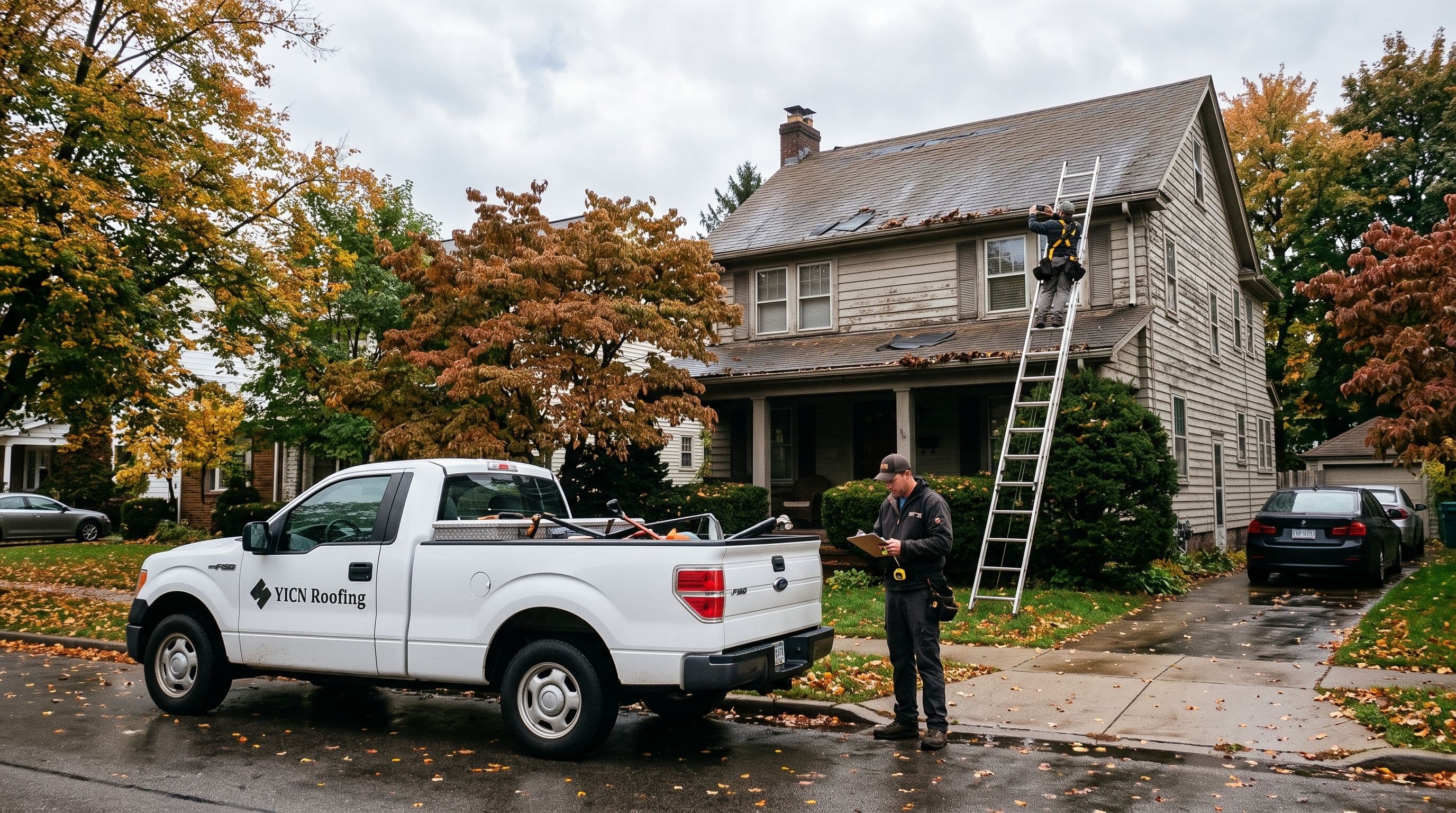
The first visit is the claim's evidence-gathering phase, and it happens before anything gets fixed. We inspect every slope, not just the one over the bedrooms: shingles missing, lifted, or creased at the midpoint, hail bruising you can feel with fingertip pressure, punctures, damaged pipe boots and ridge vents, gutter and downspout dents, and soft decking walked by hand. Everything gets photographed, time-stamped, and matched to the storm date.
The distinction that decides claims: a 20 year old roof with wind-lifted shingles at the eaves is a storm loss, and a 20 year old roof with brittle, granule-bare shingles and no storm signature is wear. Asphalt shingles last 20 to 30 years in our climate, and carriers know exactly how to tell the difference. Our guide on how to document roof storm damage covers the photo checklist the adjuster will expect.
Step 2: Emergency Tarping, the Mitigation Duty
Most Ohio policies require you to prevent further damage after a loss, and that clause is where unprepared homeowners accidentally cost themselves money. A hole or a lifted section that leaks into the attic for three more weeks turns a clean storm claim into a water damage dispute about what the storm caused versus what the delay caused. Tarp it, document before and after, and keep receipts. The emergency tarping protocol covers what counts as reasonable mitigation and what gets reimbursed.
Step 3: Filing Inside the Window
Ohio policyholders have one year from the date of loss to file, and the safest practice is to file within days of the storm while the evidence is fresh. You need the date of loss, the carrier, your policy number, and a description of the damage. File even if you are unsure of the full scope, because the scope gets defined later at the adjuster inspection and the supplement stage. The one-year clock does not pause while you collect bids.
Step 4: The Adjuster Inspection, With Your Contractor Present
The carrier's adjuster measures the damage against the policy. Our job at that meeting is making sure the measurement is complete: every slope, every soft spot, every nail pop, gutters and vents included. A solo adjuster on a steep roof often inspects from a ladder at the edge, and that is exactly how hail bruising on the back slope gets left off the scope. When the scope misses damage, the first check is small, and homeowners assume the process is finished. It is not. How we handle your claim walks this stage in detail.
Step 5: The Estimate and the Supplement
The initial carrier estimate is a first draft, not a verdict. Licensed contractors work to Ohio building code, and code-required work like ice and water shield at the eaves, proper underlayment, or decking replacement is often absent from a first scope. A supplement is the formal, documented request to correct the scope: it cites line items, code references, and photographs, and it is a normal, expected part of the process rather than a fight. Storm claims are where supplements matter most, because hail damage is frequently more extensive than a ladder-edge inspection suggests. If the approved scope covers repairs but the roof fails the test of repairability, the conversation moves to replacement, which our roof replacement claim guide covers in full.
Repair or Replacement After a Storm
The honest contractor answer is that storm damage gets repaired when the damage is isolated and the shingles can be matched, and it gets replaced when hail bruising is widespread, the decking is soft, or the shingles are too brittle to reseal. Widespread bruising across every slope is a replacement even when the roof still sheds water, because bruised shingles fail years early and no patch fixes that. Our roof repair versus replacement breakdown and the Cleveland Heights storm damage insurance guide cover the decision factors, including how insurers evaluate roofs near the end of their service life.
Storm Chasers and the Door-to-Door Problem
After every verified storm event in Ohio, out-of-town crews arrive before the adjusters do. The Better Business Bureau has repeatedly warned Ohio homeowners about door-to-door contractors who pressure same-day signatures, collect deposits, and disappear before the work starts. The protections are real but only if you use them: Ohio Revised Code 1345.22 gives you three business days to cancel any contract signed at your home, and a certificate of insurance naming your address is the floor for anyone on your roof. Our guide on roofing company red flags lists the vetting steps, and a local company with a physical Northeast Ohio address answers its phone in January if the repair has a problem.
What the Claim Actually Pays For
On an RCV policy, the carrier typically issues the actual cash value portion first and releases the recoverable depreciation after the work is complete, so a low first check is a schedule, not an insult. The wind and hail percentage deductible, usually 1 to 2 percent of dwelling coverage, comes off the top, which is 2,500 to 5,000 dollars on a typical area home. Match the check sequence to your policy type before you schedule the work, and finish inside the carrier's completion deadline so the depreciation is released.
FAQ
Should I get the roof inspected before I call my insurance company?
Yes, in most cases. A free roof inspection documents whether there is actual storm damage before a claim exists. Filing a claim for damage that turns out to be wear creates a claim record on your policy history for a loss that was never covered.
How long after a storm can I file a roof claim in Ohio?
Ohio gives you one year from the date of loss. File within the first two weeks anyway: photographs, weather records, and physical evidence like bruised shingles are strongest right after the event, and adjuster backlogs stretch after major storms.
Will the insurance company pay for a whole new roof or just the damaged section?
It depends on scope, not preference. Isolated wind damage on a young roof often gets a repair payment. Widespread hail bruising, soft decking, or unmatchable brittle shingles support full replacement, and a documented supplement correcting the initial scope is the mechanism that gets there.
Can my roofing contractor really attend the adjuster inspection?
Yes, and you should insist on it. The inspection is scheduled by the carrier, but nothing prevents you from having a licensed contractor present to point out every slope's damage, measure against code, and document disagreements on the spot.
What is a supplement on a storm claim?
A supplement is a contractor-prepared, documented request to correct the carrier's scope: missed damage, code-required materials, decking replacement. It is submitted after the initial estimate, and it is a standard part of storm claims rather than an escalation.
Is storm damage roof repair covered by insurance in Ohio?
Sudden wind and hail damage is a covered peril under most Ohio homeowner policies. The claim pays for the storm damage itself, not pre-existing wear or maintenance neglect, which is why documentation connecting each finding to the storm date decides the outcome.
Conclusion
A storm claim is a documentation project with a construction phase, and the contractor you pick before the adjuster calls is the person protecting both. Inspect early, tarp what leaks, file inside the window, put your roofer in the yard on inspection day, and treat the first estimate as a draft. YICN Roofing runs this sequence for homeowners across Northeast Ohio, storm after storm, and we handle the documentation, the adjuster meeting, and the supplement so the scope matches the damage. Call or text (937) 756-2124 for a free storm inspection, ideally before the tarps go on and always before the paperwork starts.
Frequently Asked Questions
About the Author: Kevin Stone , chairman and founder of YICN Roofing (Your Insurance Claims Network), Northeast Ohio's premier storm damage roofing contractor serving homeowners throughout Bedford Heights and the surrounding 30-mile radius. Operating from the company's headquarters at 5420 Mardale Ave, Bedford Heights, OH 44146, Kevin has transformed YICN Roofing into a top-rated roofing company with an A+ Better Business Bureau score and over 100 satisfied customers who trust his expertise for their most critical roofing needs. Since establishing YICN Roofing, Kevin has built a reputation that extends far beyond traditional roofing services. His comprehensive understanding of the insurance claims process, combined with decades of hands-on roofing expertise, has positioned YICN Roofing as the go-to contractor for Northeast Ohio homeowners facing storm damage, emergency repairs, and comprehensive roof restoration projects. Available 24 hours a day at (937) 756-2124, Kevin ensures that no homeowner in Bedford Heights, Cleveland, Akron, or surrounding communities is left vulnerable to the elements when roofing emergencies strike. Northeast Ohio Roofing Expertise and Regional Understanding Kevin's deep expertise in Northeast Ohio roofing stems from his intimate understanding of the region's unique weather challenges and architectural requirements. The Greater Cleveland area, including Bedford Heights and surrounding communities, faces some of the most demanding weather conditions in the Midwest. Lake-effect snow systems regularly dump heavy loads on residential roofing systems, while spring and summer storms bring devastating wind and hail damage that can compromise even the most well-maintained roofs. Throughout his career, Kevin has personally overseen thousands of roofing projects across Northeast Ohio, from emergency tarping services during severe storms to complete roof replacements for homes damaged by hail, wind, and ice. His experience spans residential neighborhoods in Bedford Heights, where older homes require specialized attention to maintain their architectural integrity, to newer developments in surrounding communities that benefit from modern roofing materials and installation techniques.