
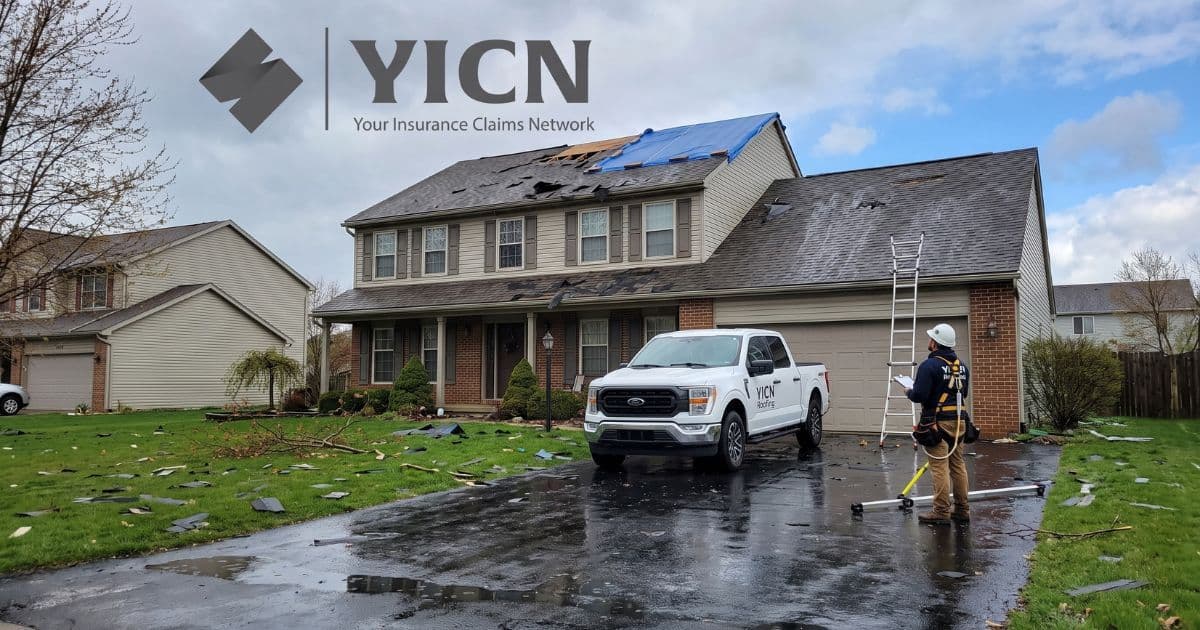
Hear a quick audio overview of Storm Damage Roofing Company Near Me: First 24 Hours Guide.
When a severe storm hits your neighborhood, the first 24 hours decide two things. Whether your roof takes more water than it had to. And whether your insurance claim has the evidence to pay. Ohio averages 35 to 40 severe thunderstorm days a year, per the National Weather Service. A severe storm means winds of 58 mph or higher, or hail of 1 inch and up.
Hail, wind, or a fallen limb — the steps are the same. This guide walks the first 24 hours, hour by hour.
Key Takeaways
- The first 24 hours follow one order: safety, water control, documentation, the roofer call, then the claim
- Emergency tarping typically runs 200 to 1,000 dollars; targeted storm repairs 350 to 1,800 dollars; a full storm-damaged roof replacement 8,000 to 18,000 dollars
- Ohio averages 35 to 40 severe thunderstorm days a year — the crews door-knocking after each one are mostly storm chasers; the BBB's 2025 warnings describe the pattern
- Documentation beats urgency: dated photos before anything changes is what carries the insurance claim
- Signed in panic? Ohio's 3-business-day cancellation window covers door-to-door contracts
Hour 0 to 2: Safety First
Before you inspect your roof, make sure the storm has fully passed and it is safe to go outside. Do not climb on your roof after a storm. Storm-damaged roofs can have weakened decking, and wet surfaces are dangerously slippery. Instead, walk around your home at ground level and look for visible signs of damage from below.
Check for fallen tree limbs on your roof or near power lines.
Look for pieces of shingle or roofing material on the ground.
Check your ceilings and attic for water stains or active drips.
If you see active water intrusion, place buckets to catch drips and move valuables away.
Hour 2 to 6: Document Everything
Documentation is the foundation of a successful insurance claim. The more evidence you have, the harder it is for an adjuster to dispute the extent of damage. Use your phone to take photos and video of everything:
Wide shots showing your entire roof and surrounding property.
Close-up photos of damaged shingles, dented gutters, or exposed flashing.
Photos of any debris on the roof or ground.
Interior photos if water has entered your home.
A time-stamped video walkthrough of the exterior showing all visible damage.
About 1 in 35 insured homes files a wind or hail claim each year, per the Insurance Information Institute. The average hail claim runs about 13,000 dollars. Typical Ohio deductibles run 1 to 2 percent of dwelling coverage — about 2,000 to 4,000 dollars on a 200,000 dollar policy. Documentation is what decides whether that check covers the real repair.
Hour 6 to 12: Call a Local Roofing Company
Before you call your insurance company, call a local roofing company that specializes in storm damage. A professional storm inspection can identify damage that is not visible from the ground, and a reputable contractor will document everything in a report you can submit with your insurance claim.
YICN Roofing offers free storm inspections within 48 hours of your call across Cuyahoga, Summit, and Medina counties. Our inspectors are trained to identify hail impact marks, wind-lifted shingles, and hidden damage that adjusters might miss.
If water is entering, tarping comes first. Emergency tarping typically runs 200 to 1,000 dollars depending on roof size and access. That's the cheap version of this story: a 400 dollar repair left through three more rain events becomes 3,000 dollars plus of interior work. For active leaks, read our guide on emergency roof repair near me for immediate steps.
Hour 12 to 24: File Your Insurance Claim
Once you have documentation and a professional inspection report, contact your insurance company to file a claim. Here is what you need to have ready:
The date and approximate time of the storm.
Your policy number and contact information.
Photos and video of the damage.
A list of visible damage from your roofing inspector.
Any receipts for emergency temporary repairs, such as tarps.
Most Ohio policies allow 1 year from the storm date to file, but do not wait. Insurance adjusters prioritize recent claims, and evidence degrades quickly. Wind-lifted shingles can settle back down, making damage harder to prove after a few weeks.
How to Pick a Storm Damage Roofing Company Fast
The hour-by-hour above is what you do. This is who you call — the fast screen when you don't have days to research:
Local first. A crew with a Northeast Ohio street address and reviews predating this week's storm. Out-of-town trucks with magnetic signs are the storm-chaser profile the BBB warns about.
Ask for the COI. General liability and workers' comp, direct from the insurer, named to your job. Two minutes of phone time with the agent.
No deductible games. Anyone offering to "eat your deductible" or advertise "free roof" signs is offering insurance fraud, and you're the one holding the policy.
Claims experience. Ask how many storm claims they've filed documentation for. The roofer's report is what your adjuster reads first.
Get the inspection in writing. Photo report, damage map, repair-vs-replace recommendation — not a clipboard quote on your porch.
The complete how-to-choose checklist covers the full vetting; the first-24-hours checklist for Bedford-area homes has the detailed timeline with photos of what damage looks like.
What the First 24 Hours Cost
Response Tier | What It Covers | Typical Cost |
|---|---|---|
Emergency tarping | Stop active water entry, meet your mitigation duty | 200 to 1,000 dollars |
Targeted storm repair | Flashing, pipe boots, a square of shingles | 350 to 1,800 dollars |
Interior restoration (delayed) | Drywall, insulation, decking from a sitting leak | 3,000 dollars and up |
Full replacement (field-wide) | Storm-bruised roof, insurance claim territory | 8,000 to 18,000 dollars |
What Not to Do in the First 24 Hours
Do not climb on your roof to inspect damage. It is dangerous and can worsen the damage.
Do not make permanent repairs before the adjuster visits. Temporary tarps are fine.
Do not throw away damaged shingles or debris. They are evidence.
Do not hire the first contractor who knocks on your door after a storm.
Do not sign a contract that requires full payment before insurance settlement.
Working With Your Insurance Adjuster
The Ohio Department of Insurance publishes the claim-handling standards adjusters work under, and knowing them keeps the process moving.
When your adjuster visits, having your roofing contractor present can make a significant difference. A contractor who understands storm damage can point out issues the adjuster might overlook, such as creased shingle tabs from wind lift or impact marks from hail that are not visible from the ground.
YICN Roofing meets with your insurance adjuster on-site at no additional cost. We document the inspection, provide our damage report, and ensure nothing is missed.
For more on this process, see our guide on how insurance adjusters evaluate roof damage.
Why Choose YICN Roofing for Storm Damage
YICN Roofing has handled hundreds of storm damage claims across Northeast Ohio. We understand the insurance process from start to finish, and we handle the paperwork so you do not have to.
Free storm inspections within 48 hours across Cuyahoga, Summit, and Medina counties.
Complete insurance claim assistance, including adjuster meetings.
Emergency tarping and temporary repairs to prevent further damage.
Documentation and photography for your insurance claim.
Lifetime workmanship warranty on all storm damage repairs and replacements.
Call Now Before the Evidence Fades
Storm damage evidence does not last. The sooner you document and file, the stronger your claim. Call YICN Roofing or schedule online for a free storm inspection today.
Related Reading
Related guides: the signs of hail damage, the June 2026 Cleveland hail report, and the hidden costs of waiting.
Frequently Asked Questions
About the Author: Kevin Stone , chairman and founder of YICN Roofing (Your Insurance Claims Network), Northeast Ohio's premier storm damage roofing contractor serving homeowners throughout Bedford Heights and the surrounding 30-mile radius. Operating from the company's headquarters at 5420 Mardale Ave, Bedford Heights, OH 44146, Kevin has transformed YICN Roofing into a top-rated roofing company with an A+ Better Business Bureau score and over 100 satisfied customers who trust his expertise for their most critical roofing needs. Since establishing YICN Roofing, Kevin has built a reputation that extends far beyond traditional roofing services. His comprehensive understanding of the insurance claims process, combined with decades of hands-on roofing expertise, has positioned YICN Roofing as the go-to contractor for Northeast Ohio homeowners facing storm damage, emergency repairs, and comprehensive roof restoration projects. Available 24 hours a day at (937) 756-2124, Kevin ensures that no homeowner in Bedford Heights, Cleveland, Akron, or surrounding communities is left vulnerable to the elements when roofing emergencies strike. Northeast Ohio Roofing Expertise and Regional Understanding Kevin's deep expertise in Northeast Ohio roofing stems from his intimate understanding of the region's unique weather challenges and architectural requirements. The Greater Cleveland area, including Bedford Heights and surrounding communities, faces some of the most demanding weather conditions in the Midwest. Lake-effect snow systems regularly dump heavy loads on residential roofing systems, while spring and summer storms bring devastating wind and hail damage that can compromise even the most well-maintained roofs. Throughout his career, Kevin has personally overseen thousands of roofing projects across Northeast Ohio, from emergency tarping services during severe storms to complete roof replacements for homes damaged by hail, wind, and ice. His experience spans residential neighborhoods in Bedford Heights, where older homes require specialized attention to maintain their architectural integrity, to newer developments in surrounding communities that benefit from modern roofing materials and installation techniques.