
Hear a quick audio overview of Top Signs of Hail Damage on Your Roof (And What to Do).
Granules in the gutter, a soft spot on a shingle, a dent in the AC condenser hail damage announces itself in small, easy to miss ways. The big stuff (torn tabs, crushed ridge vents) is obvious from the driveway. The expensive stuff is what you can't see from the ground. Here are the signs that matter, where to find them, and what each one means for your roof's future.
Key Takeaways
- The fastest ground level tell: piles of ceramic granules in the gutter trough after a hailstorm
- Bruises, not cracks: press a suspected hail spot gently if the shingle gives, the mat is compromised
- Collateral damage sizes the stones: dents on gutters, vents, window screens, and AC condensers mean the roof took the same hits
- Hail damage is a covered Ohio peril, but bruising gets harder to prove as weeks pass document early
- Hail of 1 inch or larger warrants a documented inspection, even if nothing looks wrong from the ground
Sign 1: Granules Piling Up in the Gutters
Asphalt shingles are armored in ceramic granules. Hail knocks them loose. After a storm, check the gutter troughs and the ground under downspout exits: piles of sandy, grit like granules mean the shingles are shedding their protective layer. Granule loss matters twice. Bare spots expose the fiberglass mat to UV, which ages a shingle rated for 20 to 25 years in just a few seasons of summer sun. And granules in the gutter are the evidence an adjuster looks for first, because they're objective they don't wash away overnight like bruises flatten out.
Sign 2: Soft Bruises on the Shingles
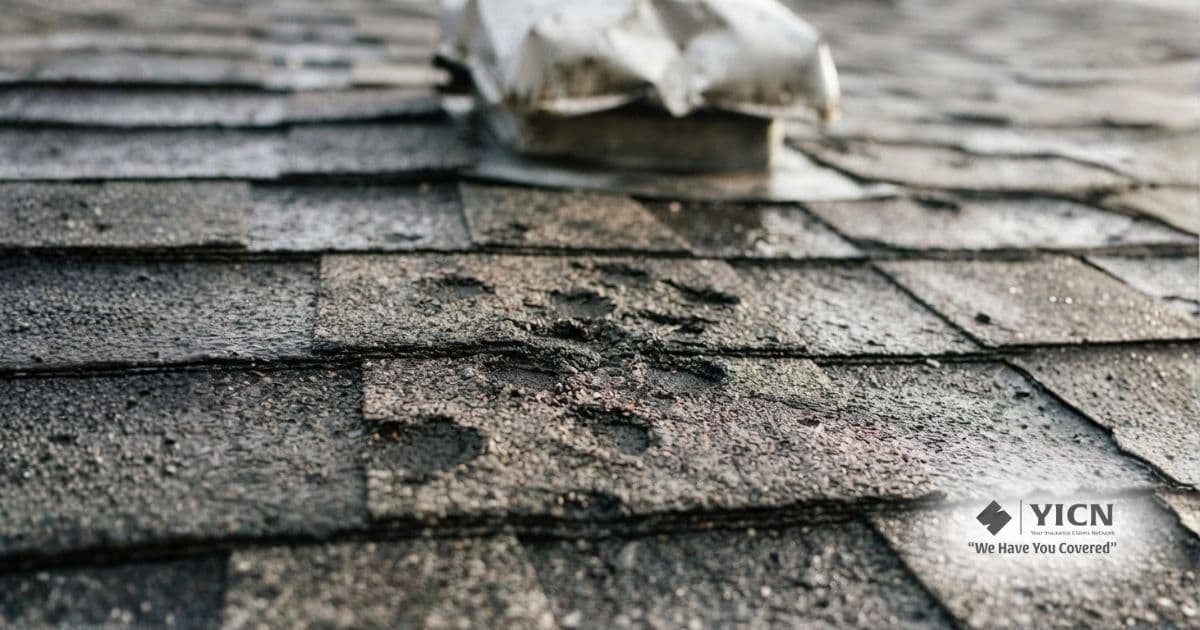
From the ground you can't see these. Up close, a hail bruise is a dimple a spot where the granules were compacted into the mat. Run a fingertip or press gently: a bruised spot gives under light pressure where the surrounding shingle stays firm. These soft spots are the damage adjusters measure, because a compromised mat is a shingle that will crack and leak within a few seasons of freeze-thaw. Bruising is why "it looks fine from the street" means nothing after hail of 1.75 inches and up the size where replacement becomes the common outcome.
Sign 3: Bare Spots Showing the Mat
Where hail hit hardest, the granules are gone entirely and the fiberglass mat shows through as a shiny or dark patch. A bare spot is the late stage version of granule loss, and it's an immediate leak risk: the mat isn't waterproof, the granule armor is. One or two bare spots can be repaired; a field of them is the replacement conversation, and it's also the claim insurers cover replacement when documented damage is field-wide.
Sign 4: Dented Metal — Gutters, Vents, Flashing, HVAC
Everything metal on and around your house records hail the same way. Check the gutters and downspouts for dimples, the ridge vents and plumbing boots on the roofline for dings, and the cap on the AC condenser for a speckled pattern. Window screens tear and aluminum siding dents. This collateral damage is how you size the storm without climbing anything. About 1 in 35 insured homes files a wind or hail claim each year, and the condenser cap with a speckled dent pattern is the cheapest barometer there is: the roof ate the same stones, plus the wind that often blows 58 mph in the same storm cell. Adjusters photograph it as corroboration, so you should too.
Sign 5: Cracked or Torn Shingle Tabs
Cracks in a shingle after hail are the aggressive version of bruising the mat fractured instead of denting. Hail cracking often needs cold weather to appear (hail plus a cold snap is the killer combo), and cracked tabs are an active water entry path, not just accelerated aging. Torn tabs, lifted edges, and creased shingles (a horizontal crease from wind lifting the tab back) belong to the wind that accompanied the hail. Creases and cracks mean tarp-able damage that's the tier where speed matters.
Sign 6: Water Stains in the Attic or Ceilings
The sign you find last and pay for most. Brown rings on ceilings, wet insulation, drips around recessed lights or the attic deck water has already crossed the roof plane. Active water entry is the emergency tier: contain it inside (buckets, towels, power off in wet areas), tarp if needed, and document every interior surface before cleanup. Interior stains also date the leak, which helps the claim a stain map tells the adjuster which storm did what.
What to Do When You Find These Signs
One: photograph everything from the ground, wide shots and close-ups, before anything changes. Two: check the official storm record the NWS Cleveland office logs severe hail (1 inch and up) by date and location, and insurers accept it as event evidence. Three: get a documented inspection before the evidence fades. Emergency tarping runs 200 to 1,000 dollars; storm repairs caught early run 350 to 1,800 dollars; the full six-step inspection process is in our hail damage roof inspection checklist. Field-wide bruising moves the conversation to replacement 8,000 to 18,000 dollars on a typical Northeast Ohio asphalt roof and that's claim territory where documentation is everything.
Hail damage is a covered peril under standard Ohio homeowner's policies, with your deductible applying typically 1 to 2 percent of dwelling coverage, about 2,000 to 4,000 dollars on a 200,000 dollar policy. What decides whether the claim pays for a repair or a replacement is the inspection report that maps the damage. YICN Roofing does that inspection free, documents it claim-ready, and meets your adjuster on the roof. Call (937) 756-2124 or request a free inspection.
Related guides: the six-step hail inspection checklist, the first-24-hours storm checklist, and the June 2026 Cleveland hail report.
Frequently Asked Questions
About the Author: Kevin Stone is the CEO of Your Insurance Claims Network and a certified storm damage specialist. With over 15 years of experience in Northeast Ohio, he has overseen thousands of emergency tarping installations and helped homeowners protect their properties from further storm damage.