
Hear a quick audio overview of Roof Maintenance Before Snow: NE Ohio Winter Prep Guide.
Northeast Ohio gets about 64 inches of snow in a normal season, and your roof takes every inch of it. The maintenance you do in October and early November decides whether January is a quiet month or a ceiling-stain, bucket in the hallway month. Most winter roof failures are not caused by snow alone. They are caused by small problems, loose shingles, clogged gutters, blocked vents, heat leaking into the attic, that the snow and freeze-thaw cycle then turn into big ones.
This guide is the complete pre-winter sequence for Northeast Ohio homeowners: the six tasks that matter, the order to do them in, what they cost, and what to skip because it makes things worse. Each section links to a deeper guide in our winter series.
Key Takeaways
Do the six core tasks before the first lasting snow: inspect, clean gutters, check attic insulation and ventilation, seal air leaks, trim branches, and clear the roof of debris.
Ice dam removal runs 300 to 2,000 dollars, and the average ice dam insurance claim lands between 7,000 and 12,000 dollars. Prevention costs a fraction of either.
Ohio code sets a minimum of R-49 attic insulation for new homes, and Energy Star recommends R-60 for Ohio attics. Most older homes are far below both.
About 1 in 4 Ohio homes was built before 1950, so many roofs in our area carry older flashing, lower insulation, and worn ventilation that winter stress exposes fast.
Never chop ice, salt a roof, or pour hot water on an ice dam. Each one causes damage the insurance company does not have to pay for.
If you find problems now, a free roof inspection costs nothing and beats a January emergency every time.
Why Northeast Ohio Winters Are Hard on Roofs
The Cleveland area sits in the Lake Erie snow belt. Lake effect snow arrives early, falls heavy, and keeps the roof cold while lake clouds swing through. A normal season at Cleveland Hopkins brings about 64 inches of snow, and towns east of the city often see far more.
Snow itself is usually not the enemy. The enemy is the cycle. Water from melting snow runs toward cold eaves and refreezes, expanding about 9 percent as it turns to ice. That expansion lifts shingles, wedges open flashing seams, and pries apart everything that was already loose. Each freeze thaw cycle widens the gap a little more.
This is why the maintenance window matters. A curled shingle in September is a five minute repair. The same shingle in February is a leak path that water follows into your attic every time the roof surface thaws.
Task 1: The Pre-Snow Roof Inspection
Start from the ground with binoculars, then decide whether anything needs a closer look. You are checking for shingles that are missing, cracked, curling, or losing granules, damaged or rusted flashing around the chimney and vents, and sagging areas that suggest a deeper problem.
Inside, look at the attic after a rain: water stains on sheathing or damp insulation tell you the roof is already failing somewhere. Our full pre-winter roof inspection checklist walks through every checkpoint, but the short version is that anything suspicious gets documented now, while repair scheduling is still easy.
If you are not comfortable climbing, this is the moment to book a free inspection. October inspections find the crack. February inspections find the bucket.
Task 2: Clean the Gutters Before the Ground Freezes
Clogged gutters are the single most common winter roof failure we see in Northeast Ohio. A gutter full of leaves holds meltwater against the roof edge, where it refreezes into the exact ice ridge that causes ice dams.
Clean gutters and downspouts after the last leaves fall but before the first hard freeze. Check that downspouts discharge at least four feet from the foundation, and that gutter seams and hangers are tight. We explain the full connection between gutter condition and winter leaks in our guide to gutter cleaning before winter. If your gutters are past cleaning and into replacing, our seamless gutter installation guide covers the upgrade path.
Task 3: Check Attic Insulation and Ventilation
Here is the fact most homeowners miss: ice dams are mostly an attic problem, not a roof problem. Warm air leaking into the attic melts snow on the roof deck above the living space. The meltwater runs down to the cold eave edge and refreezes into a dam. The roof did nothing wrong. The house under it is losing heat.
Ohio residential code sets a minimum of R-49 attic insulation for new construction, and Energy Star recommends R-60 for our climate. Older homes frequently sit well below that, and about 1 in 4 Ohio homes was built before 1950. If you can see the tops of your ceiling joists in the attic, your insulation is almost certainly too thin.
Ventilation matters just as much. Soffit vents feed cold outside air under the roof deck, and ridge or box vents exhaust warm moist air out the top. Both must be clear. Our guide to attic insulation and ventilation covers the full fix, including the air sealing step most people skip.
Task 4: Trim Branches Back From the Roof
Snow load does not need a branch's help to break a limb. A branch that hangs over the roof collects snow, then drops it all at once in a heavy clump, or snaps under load and lands on the shingles. It also scrubs granules off the roof surface every time the wind blows.
Trim back anything within about six feet of the roofline. If the branch is large or the work requires a ladder on frozen ground later, do it now or hire an arborist. Pruning in October is routine. Pruning in an ice storm is an emergency room visit.
Task 5: Clear Debris and Check Flashing
Leaves, pine needles, and branch debris that collect in roof valleys hold moisture against the shingles all winter. Clear the valleys, check that chimney flashing is sealed, and confirm vent boots are intact. These are the small penetrations that account for a huge share of winter leak calls. If you find a small leak, our guide on DIY roof leak repair versus hiring a pro tells you which repairs are safe for a homeowner and which need a crew.
Task 6: Plan for Snow Removal Now
Decide before the first storm how you will handle heavy snow. A roof rake is fine for pulling snow off single story eaves. Keep it to the lower three feet of the roof. Higher work and anything near power lines needs a professional. Know who you will call, because the emergency roof repair companies that answer in a storm are the ones you want saved in your phone before the storm.
What NOT to Do: Ice Dam Removal Mistakes
When ice dams form, the damage is usually done by the removal, not the ice. Never do any of these:
Chop or hammer the ice. Every strike transfers force through the shingles, and crushed shingles are a repair, not a claim.
Salt or ice melt products on the roof. They corrode flashing and gutters and stain shingles, and the chemical runoff kills plants.
Pour hot water from a ladder. The temperature shock cracks shingles, and ladders on icy ground are the worst injury risk in roofing.
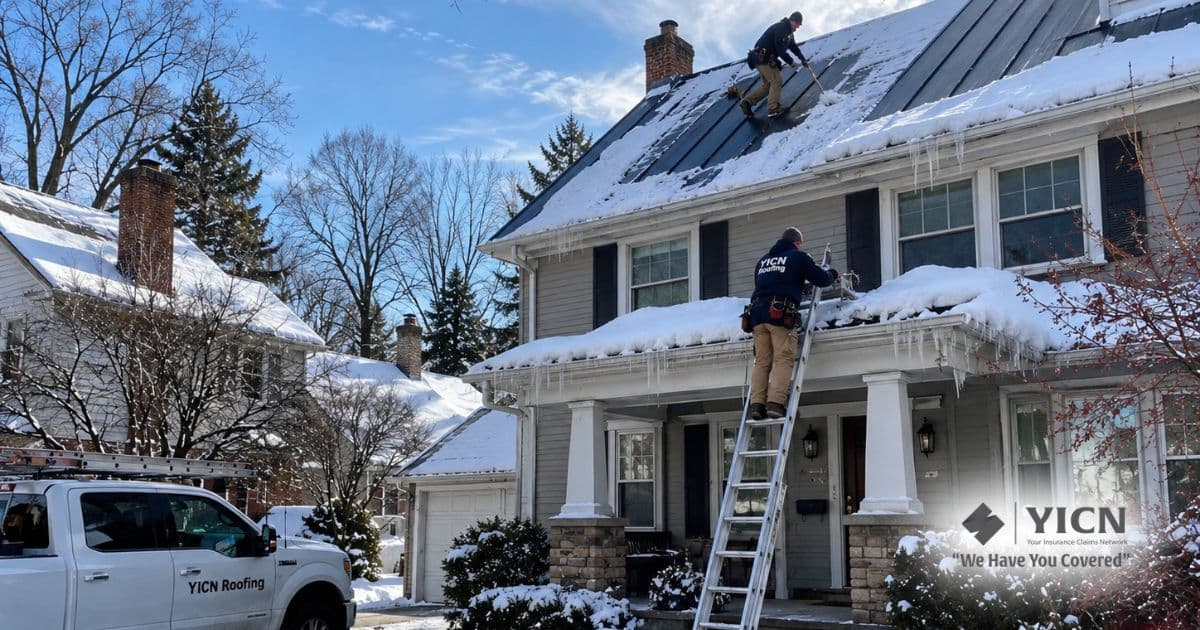
Professional ice dam removal, done with steam, typically runs 300 to 2,000 dollars, with most homeowners paying between 500 and 1,500 dollars. That is real money, but the average ice dam insurance claim, ruined ceilings, soaked insulation, mold, runs 7,000 to 12,000 dollars according to Insurance Information Institute guidance. If water backs up behind an ice dam, dwelling coverage in a typical policy usually pays for the interior damage, but it will not pay for the worn shingles or aging gutters that contributed to the problem. Our guide on what insurance covers for roof leaks explains the line.
The Winter Maintenance Calendar
Early October: Full inspection, document anything suspicious, schedule repairs.
Late October, after leaves fall: Gutter and downspout cleaning, valley debris removal.
Early November: Attic insulation and ventilation check, air sealing, branch trimming.
Before first freeze: Flashing check, roof rake purchase, snow plan and contacts saved.
During winter: Monitor roof valleys and eaves after each major storm, watch ceilings for stains.
If you want the other end of the season, our end of winter roof checklist covers the spring inspection that follows this preparation.
Conclusion
Winter roof maintenance is six jobs, not sixty: inspect, clean gutters, insulate and ventilate the attic, trim branches, clear debris and check flashing, and have a snow plan. Do them in October and November and the odds are very good that your roof will quietly do its job until spring. Skip them and you are betting against about 64 inches of snow and a lake that does not care about your schedule.
YICN Roofing serves homeowners across Northeast Ohio with inspections, gutter cleaning, insulation, and winter storm response. Call or text (937) 756-2124 before the snow flies, and we will tell you honestly whether your roof is ready.
FAQ
When should I do roof maintenance before winter in Northeast Ohio?
Complete the full sequence in October and early November. Gutter cleaning should wait until after the last leaves fall but finish before the first hard freeze, which typically arrives in our area in mid to late November.
How much snow can a residential roof hold?
A roof built to modern Ohio code handles roughly 20 pounds per square foot of snow load, which is about a foot of average snow or a few inches of wet snow and ice. Older roofs with damaged framing carry less, which is one reason the pre-winter inspection matters.
Will ice dams damage my roof even if it does not leak inside?
Yes. Ice under shingles lifts and cracks them even when water never reaches the ceiling. The damage shows up as granule loss, broken seals, and leaks during the next rain, so ice dams should be addressed even without visible interior damage.
Does homeowners insurance cover ice dam damage?
Typically yes for sudden water damage to the dwelling's interior, including soaked drywall and insulation. Policies generally do not cover the underlying wear that let the dam form, so documentation and a professional assessment at the time of the damage both help the claim.
Is a roof rake safe for my shingles?
Used correctly on the lower edge of the roof, yes. Never rake upward, which can lift and break shingles, and stop at about three feet up. If you have a steep roof or a second story, leave it to professionals.
What is the single highest-value winter prep task?
Attic air sealing plus insulation to the R-49 code minimum, and up to the R-60 Energy Star recommendation. It attacks the root cause of ice dams, cuts heating costs, and pays for itself in a few seasons.
Frequently Asked Questions
About the Author: Kevin Stone , chairman and founder of YICN Roofing (Your Insurance Claims Network), Northeast Ohio's premier storm damage roofing contractor serving homeowners throughout Bedford Heights and the surrounding 30-mile radius. Operating from the company's headquarters at 5420 Mardale Ave, Bedford Heights, OH 44146, Kevin has transformed YICN Roofing into a top-rated roofing company with an A+ Better Business Bureau score and over 100 satisfied customers who trust his expertise for their most critical roofing needs. Since establishing YICN Roofing, Kevin has built a reputation that extends far beyond traditional roofing services. His comprehensive understanding of the insurance claims process, combined with decades of hands-on roofing expertise, has positioned YICN Roofing as the go-to contractor for Northeast Ohio homeowners facing storm damage, emergency repairs, and comprehensive roof restoration projects. Available 24 hours a day at (937) 756-2124, Kevin ensures that no homeowner in Bedford Heights, Cleveland, Akron, or surrounding communities is left vulnerable to the elements when roofing emergencies strike. Northeast Ohio Roofing Expertise and Regional Understanding Kevin's deep expertise in Northeast Ohio roofing stems from his intimate understanding of the region's unique weather challenges and architectural requirements. The Greater Cleveland area, including Bedford Heights and surrounding communities, faces some of the most demanding weather conditions in the Midwest. Lake-effect snow systems regularly dump heavy loads on residential roofing systems, while spring and summer storms bring devastating wind and hail damage that can compromise even the most well-maintained roofs. Throughout his career, Kevin has personally overseen thousands of roofing projects across Northeast Ohio, from emergency tarping services during severe storms to complete roof replacements for homes damaged by hail, wind, and ice. His experience spans residential neighborhoods in Bedford Heights, where older homes require specialized attention to maintain their architectural integrity, to newer developments in surrounding communities that benefit from modern roofing materials and installation techniques.