
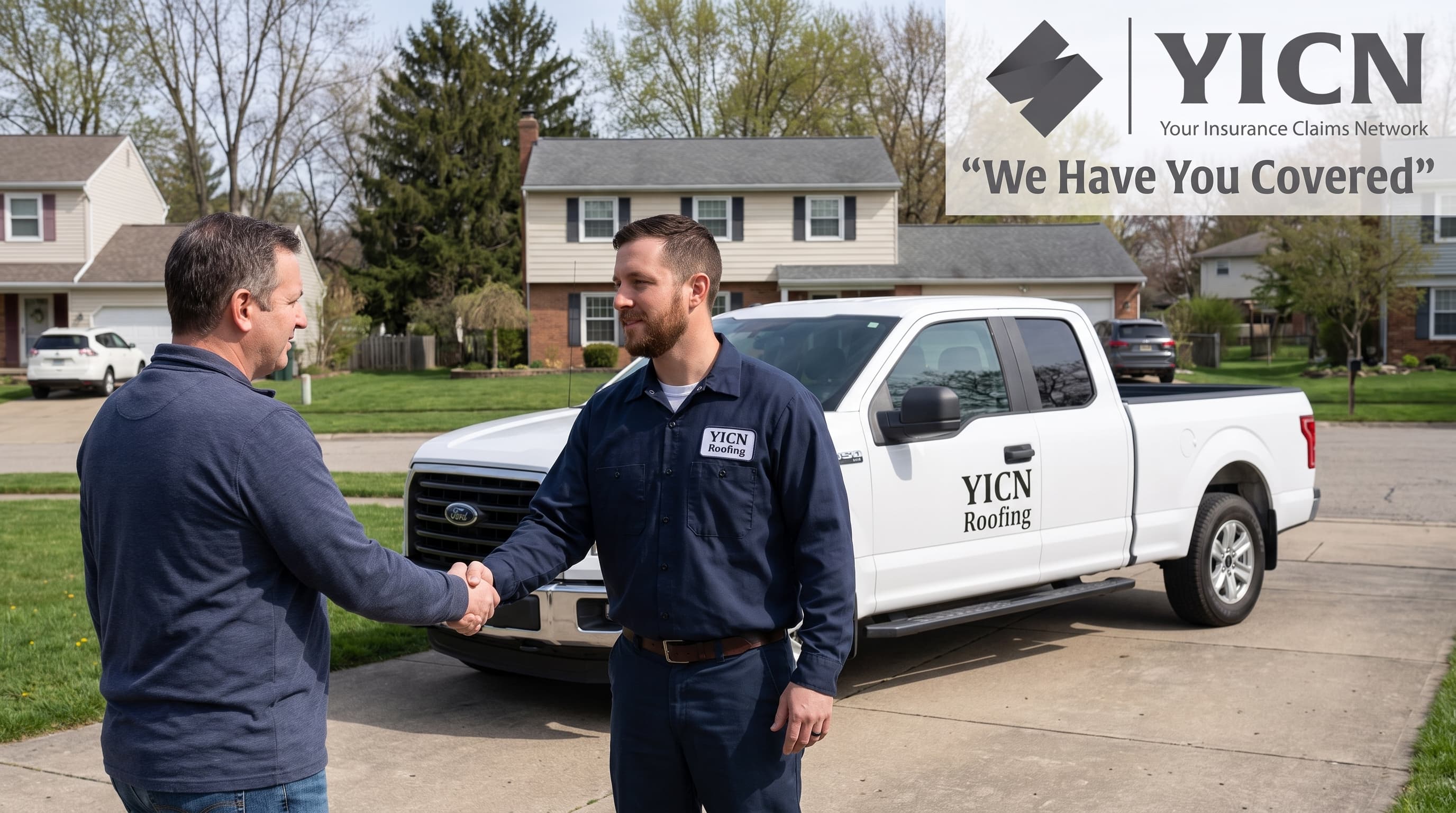
Hear a quick audio overview of Emergency Roof Repair in Cleveland Heights: What to Do Right Now.
If your roof is leaking right now in Cleveland Heights, do three things in order: contain the water, document the damage from the ground, and get a tarp over the breach. Everything else, the insurance call, the permanent repair, the contractor selection, comes after those three. Emergency roof repair in this city typically costs $300 to $1,500 for the immediate stabilization, and if a storm caused the damage, insurance usually covers both the emergency work and the permanent fix when you document properly.
This guide covers the emergency sequence, what each step should cost, how Cleveland Heights weather creates these situations, and how to protect an insurance claim while the water is still dripping.
Key Takeaways
First hour priorities: contain water, photograph from the ground, tarp the breach. Do not climb on a wet or storm-damaged roof.
Emergency stabilization in Cleveland Heights runs $300 to $1,500 for tarping and patching, with ice dam emergencies adding $500 to $2,000.
Ohio gives you one year from the storm date to file an insurance claim, so document everything the same day it is safe.
Emergency work is temporary by design. Schedule the permanent repair before the tarp comes off, not after it fails.
YICN Roofing offers emergency tarping and 48-hour inspections across the east side. Call (937) 756-2124.
The First Hour: Exact Sequence
1. Contain the water. Move furniture and belongings out of the drip path. Put a container under the active drip, and if the ceiling is bulging, place a bucket and puncture the lowest point of the bulge so water drains into the container instead of spreading across the drywall. It feels counterintuitive to put a hole in your own ceiling, but a controlled drain prevents a collapse.
2. Kill power to wet areas. If water is near fixtures or outlets, flip the breaker for that circuit. Water and wiring do not negotiate.
3. Photograph everything from the ground. Wide shots, close shots, the ceiling stain, the wet floor, anything visible on the roofline from the yard. These photos carry real weight with insurance adjusters later. Our guide on what to do first when your roof is leaking covers this sequence in more depth.
4. Call for emergency tarping. A professional tarp over the damaged section stops the active intrusion. YICN Roofing provides emergency tarping service throughout Cleveland Heights from our Bedford Heights base, usually installed for 300 to 500 dollars depending on roof height and access.
Do not climb on the roof yourself. Wet shingles are slippery, storm-damaged decking can be soft, and emergency room visits cost more than any tarp job. Every professional tarping call we run starts with a safety assessment from the ground.
What Emergency Roof Repair Costs in Cleveland Heights
Emergency Service | Typical 2026 Cost |
Emergency tarping, standard access | $300 to $500 |
Leak diagnosis and emergency patch | $300 to $1,200 |
Ice dam removal, steam method | $500 to $2,000 |
Emergency flashing repair | $300 to $1,000 |
Storm damage repair with decking | $2,000 to $10,000 |
These numbers line up with our full roof repair cost guide for Cleveland Heights. The emergency premium, when one applies, comes from after-hours response and short-notice staging, not from the materials, which are the same ones used in scheduled repairs.
Two honest notes on pricing. First, an honest emergency quote is a written quote: if the number changes after the crew arrives, stop the work and ask why. Second, emergency work is a down payment on the full diagnosis, not a substitute for it. A tarp that holds for 90 days is a success. A tarp you forget about is a future ceiling stain.
Why Cleveland Heights Produces Roof Emergencies
The Ohio Housing Finance Agency reports that 1 in 4 homes across Ohio was built before 1950, and in Ohio's urban cores that share reaches 58 percent. Cleveland Heights sits in the middle of that older stock, and its emergencies follow three seasonal patterns:
Winter: ice dams. Lake-effect snow and freeze-thaw cycles pile snow on eaves. Meltwater refreezes at the cold edge, and even 6 inches of rim ice can force water backward under shingles and into walls. Removing an established dam costs 500 to 2,000 dollars, and every winter we steam dams off east-side homes that were fine in October.
Spring and summer: storms. Two major hail storms hit Northeast Ohio in June 2026, damaging over 33,000 structures with hail of 2 inches or larger, according to reports from the storms that our June 2026 hail storm guide documents in detail. Hail damage is quiet: shingles bruised in June often do not leak until November, when the damage has compounded.
Fall: wind and debris. Autumn storms lift shingles and drop limbs. An asphalt roof rated for 20 to 30 years still fails early when a limb punches through a valley.
The U.S. Census Bureau counts about 19,300 households in Cleveland Heights, and most of those homes are over 80 years old. Age plus weather means emergency readiness is simply part of owning a home in this city.
Protecting Your Insurance Claim During an Emergency
The Insurance Information Institute reports that roughly 1 in 35 homes files a wind or hail claim each year, and the average hail damage claim pays out about 13,000 dollars. Emergencies are when claims are won or lost, so:
Photograph before the tarp goes on. The damaged area, as-is, is your evidence. Once the tarp covers it, the visual proof is gone.
Keep every receipt. Emergency mitigation costs are usually reimbursable. The tarp job that cost you 400 dollars this week can be a covered expense in the claim.
Do not throw anything away. Damaged shingles, broken limb sections, the soaked ceiling tile. Adjusters can read debris like a report.
File within the window. The Ohio Department of Insurance gives you one year from the storm date. After that, most insurers deny claims entirely, no matter how legitimate.
Have your contractor meet the adjuster. Our walkthrough on documenting roof storm damage for an insurance claim shows what adjusters look for and how to present it.
One local warning: after big storms, out-of-area contractors knock doors in Cleveland Heights promising "free roofs." Emergency pressure is exactly how bad contracts get signed. A legitimate local crew has a physical address you can verify, and our Cleveland Heights roof repair hub includes the full vetting checklist.
Emergency vs. Scheduled: Knowing Which You Actually Have
Not every ceiling stain is an emergency, and treating everything like one costs money:
True emergency: active water intrusion, visible sagging, exposed decking, storm damage with rain in the forecast. Call now.
Urgent but schedulable: a small stain after heavy rain that dries, a single missing shingle on an otherwise sound roof, slow gutter issues. Book an inspection within the week.
An honest contractor will tell you which situation you are in. At YICN Roofing, a meaningful share of emergency calls end with us telling the homeowner the roof is stable and needs only a scheduled roof repair. That advice is free, and we would rather give it than sell an unnecessary midnight tarp.
FAQ
How fast can emergency roof repair happen in Cleveland Heights?
Emergency tarping is usually installed within 24 to 48 hours of your call, weather permitting. YICN Roofing responds across the east side from our Bedford Heights base, about 10 minutes from Cleveland Heights. Call or text (937) 756-2124.
How much does emergency roof repair cost?
Emergency tarping costs 300 to 500 dollars with standard access. Leak diagnosis and emergency patching runs 300 to 1,200 dollars. Ice dam removal with steam equipment runs 500 to 2,000 dollars in a bad winter.
Will insurance pay for emergency tarping?
Usually yes, when a covered event caused the damage. Insurance policies generally require you to mitigate further damage, so keep receipts. Emergency mitigation costs are commonly reimbursed within the claim.
Should I put a tarp on the roof myself?
Not on a steep or storm-damaged roof. Cleveland Heights homes commonly have steep 1920s pitches, and wet shingles are genuinely dangerous. Professional tarping is fast and inexpensive; a fall is not.
What is the difference between emergency repair and permanent repair?
Emergency repair stops active water intrusion with tarps and temporary patches. Permanent repair restores the roof to weather-tight condition with matched materials and warranty. Schedule the permanent repair before removing the temporary one.
Can you fix a roof in winter in Cleveland Heights?
Yes. Emergency patching, ice dam steaming, and cold-weather shingle repair with hand-sealing are standard winter work in Northeast Ohio. Full replacements are usually scheduled for warmer months.
Conclusion
Water coming through a ceiling is alarming, but the sequence is simple: contain, photograph, tarp, then call. Cleveland Heights homes have earned their reputation for character, and part of that character is weathering lake-effect winters on an 80-plus-year-old frame. Emergencies handled correctly become minor repairs with covered claims. Handled poorly, they become denied claims and five-figure interior work.
YICN Roofing provides emergency tarping, ice dam removal, and storm response throughout Cleveland Heights. Call or text (937) 756-2124, any hour, and a local crew answers.
Frequently Asked Questions
About the Author: Kevin Stone , chairman and founder of YICN Roofing (Your Insurance Claims Network), Northeast Ohio's premier storm damage roofing contractor serving homeowners throughout Bedford Heights and the surrounding 30-mile radius. Operating from the company's headquarters at 5420 Mardale Ave, Bedford Heights, OH 44146, Kevin has transformed YICN Roofing into a top-rated roofing company with an A+ Better Business Bureau score and over 100 satisfied customers who trust his expertise for their most critical roofing needs. Since establishing YICN Roofing, Kevin has built a reputation that extends far beyond traditional roofing services. His comprehensive understanding of the insurance claims process, combined with decades of hands-on roofing expertise, has positioned YICN Roofing as the go-to contractor for Northeast Ohio homeowners facing storm damage, emergency repairs, and comprehensive roof restoration projects. Available 24 hours a day at (937) 756-2124, Kevin ensures that no homeowner in Bedford Heights, Cleveland, Akron, or surrounding communities is left vulnerable to the elements when roofing emergencies strike. Northeast Ohio Roofing Expertise and Regional Understanding Kevin's deep expertise in Northeast Ohio roofing stems from his intimate understanding of the region's unique weather challenges and architectural requirements. The Greater Cleveland area, including Bedford Heights and surrounding communities, faces some of the most demanding weather conditions in the Midwest. Lake-effect snow systems regularly dump heavy loads on residential roofing systems, while spring and summer storms bring devastating wind and hail damage that can compromise even the most well-maintained roofs. Throughout his career, Kevin has personally overseen thousands of roofing projects across Northeast Ohio, from emergency tarping services during severe storms to complete roof replacements for homes damaged by hail, wind, and ice. His experience spans residential neighborhoods in Bedford Heights, where older homes require specialized attention to maintain their architectural integrity, to newer developments in surrounding communities that benefit from modern roofing materials and installation techniques.