
Hear a quick audio overview of Metal vs. Asphalt Shingles in Northeast Ohio Winters (2026).
Every material comparison eventually meets Northeast Ohio weather. The question homeowners actually ask is not "which roof is cheaper" — that one's covered in our cost comparison — it's "which roof survives winter here." Lake-effect snow, ice dams, freeze-thaw, and the occasional 90 mph summer wind all land on the same 3,000 square feet. Here's how metal and asphalt shingles actually behave through a Northeast Ohio winter, and what each one demands from you in return.
Key Takeaways
- Metal sheds snow; asphalt holds it — a standing seam roof clears itself while a shingle roof stores the load until a thaw
- Ice dams form from heat loss, not material — but metal surfaces release ice dams differently than shingle granules, which grip them
- Asphalt shingles need hand-sealing below about 40 degrees Fahrenheit; winter shingle installs carry real technique requirements
- Snow-shedding metal needs snow guards above entryways and driveways — a shed roof is only safe where nobody walks
- Winter performance is decided as much by the attic (R-49 to R-60 insulation, per ENERGY STAR zone 5 guidance) as by the surface material
The Winter Failure Modes (Same Storm, Two Roofs)
Northeast Ohio winters attack a roof four ways — with 60 to 100 inches of snowfall per season depending on how deep into the snowbelt the house sits:
Snow load. Lake-effect events drop heavy, wet snow in bands. A surface that sheds snow carries less weight for less time.
Ice dams. Snow melts over a warm attic, refreezes at the cold eave, and water backs up behind the dam. This is a physics problem: insulation and ventilation decide it, but the surface material changes how the dam grips and releases.
Freeze-thaw. Dozens of cycles a season work every seam, fastener, and crack on the roof.
Thermal shock. A February sun can swing a dark roof surface tens of degrees in hours; materials expand and contract at different rates.
How Asphalt Shingles Handle It
Asphalt's strengths are cost and familiarity — installed at 3.50 to 5.75 dollars per square foot for quality architectural shingles, 15 to 30 years of rated life. Through a Northeast Ohio winter:
Shingle granules grip snow and ice; the roof holds its load until a thaw releases it, and a wet lake-effect snow band can put hundreds of pounds per square on the roofline while it waits. That's stable — until the thaw refreezes at the eaves and the ice dam cycle starts.
Shingles are installed with self-sealing strips that need warmth to activate. Below about 40 degrees Fahrenheit, the tabs need hand-sealing, and cold-weather installs follow stricter material-handling protocols — our winter installation guide covers what that means for a winter replacement.
Freeze-thaw works the granule bond and any lifted tab. A 15-to-30-year rated life assumes the attic underneath stays code-compliant; a venting failure shortens it fast.
How Metal Handles It
Standing seam and metal shingle systems run 8 to 14 dollars per square foot installed with 40 to 70 years of rated life — the full cost picture is here. Through the same winter:
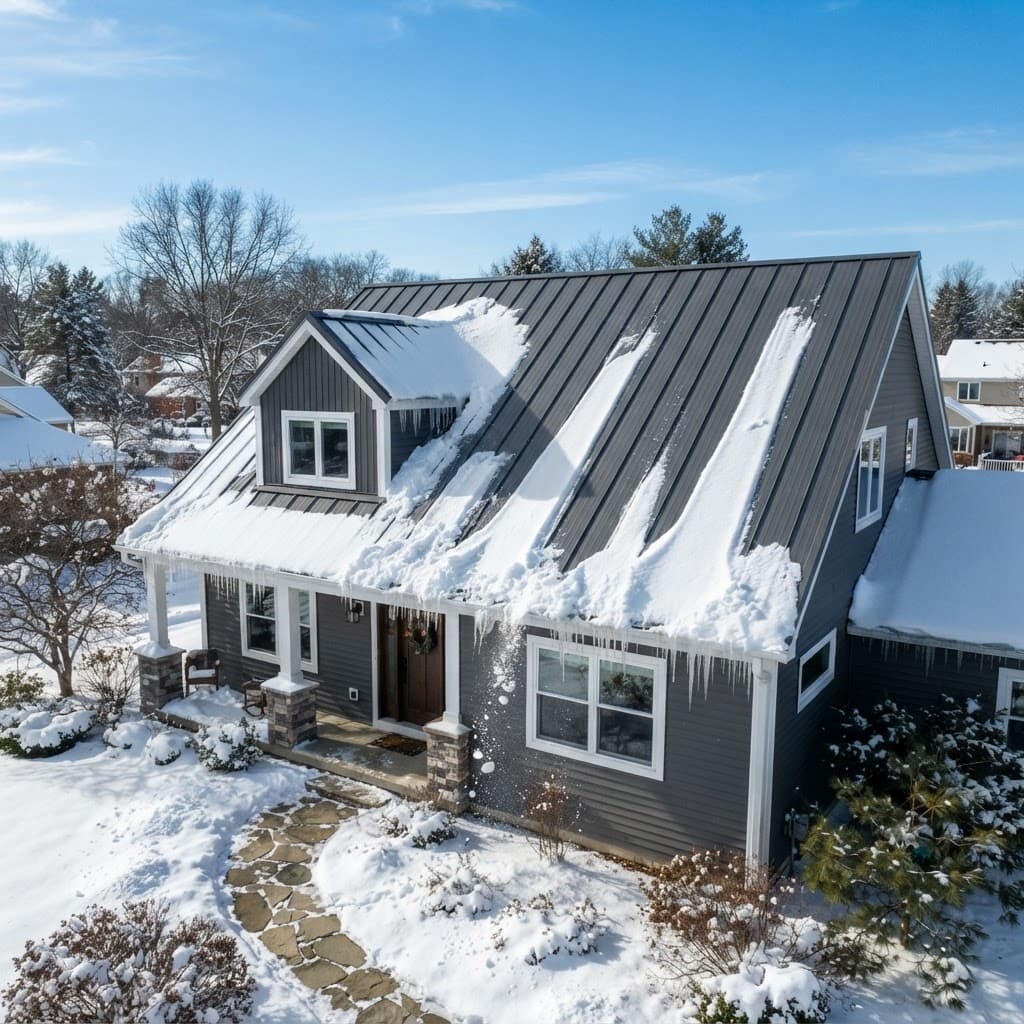
The smooth surface sheds snow in slides. The roof carries less load for less time — which is why metal handles heavy-snow climates well, and why snow guards are standard above entryways, walkways, and driveways. A shedding roof is a feature; an uncontrolled avalanche over the front door is a lawsuit. The Metal Construction Association's install guidance treats snow retention as system design, not an accessory.
Ice dams grip differently: on a shingle roof, the granules anchor the dam and the backed-up water finds the seams. On a properly detailed standing seam roof, the continuous surface and hidden fasteners give water fewer entry points, and the roof releases the dam more cleanly at thaw. No roof is "ice dam proof" — the attic fixes the cause; see our ice dam prevention guide.
Freeze-thaw and thermal shock are mostly non-events for steel and aluminum panels; expansion is engineered into the fastening system. This is where metal's longer rated life comes from in snowbelt states.
The Winter Verdict
If the comparison is only winter performance, metal wins on snow shed, freeze-thaw tolerance, and lifespan — at roughly 2 to 3 times the installed cost of asphalt. Asphalt wins on upfront price and handles a Northeast Ohio winter fine when the attic is right and the install is clean. The honest frame:
Staying 5 or fewer years — asphalt; the winter premium for metal won't pay back. Check what appraisers say about roof value before deciding.
Staying long-term, heavy lake-effect exposure — metal earns its premium one ice dam at a time. Our metal roofing service page covers the systems.
Either material — spend on the attic first: R-49 to R-60 insulation and balanced ventilation (per ENERGY STAR zone 5 guidance) prevent more winter damage than any surface upgrade.
YICN Roofing installs both — architectural shingle and standing seam — across Northeast Ohio. Free, documented inspection: call (937) 756-2124 or reach us here.
Frequently Asked Questions
About the Author: Kevin Stone , chairman and founder of YICN Roofing (Your Insurance Claims Network), Northeast Ohio's premier storm damage roofing contractor serving homeowners throughout Bedford Heights and the surrounding 30-mile radius. Operating from the company's headquarters at 5420 Mardale Ave, Bedford Heights, OH 44146, Kevin has transformed YICN Roofing into a top-rated roofing company with an A+ Better Business Bureau score and over 100 satisfied customers who trust his expertise for their most critical roofing needs. Since establishing YICN Roofing, Kevin has built a reputation that extends far beyond traditional roofing services. His comprehensive understanding of the insurance claims process, combined with decades of hands-on roofing expertise, has positioned YICN Roofing as the go-to contractor for Northeast Ohio homeowners facing storm damage, emergency repairs, and comprehensive roof restoration projects. Available 24 hours a day at (937) 756-2124, Kevin ensures that no homeowner in Bedford Heights, Cleveland, Akron, or surrounding communities is left vulnerable to the elements when roofing emergencies strike. Northeast Ohio Roofing Expertise and Regional Understanding Kevin's deep expertise in Northeast Ohio roofing stems from his intimate understanding of the region's unique weather challenges and architectural requirements. The Greater Cleveland area, including Bedford Heights and surrounding communities, faces some of the most demanding weather conditions in the Midwest. Lake-effect snow systems regularly dump heavy loads on residential roofing systems, while spring and summer storms bring devastating wind and hail damage that can compromise even the most well-maintained roofs. Throughout his career, Kevin has personally overseen thousands of roofing projects across Northeast Ohio, from emergency tarping services during severe storms to complete roof replacements for homes damaged by hail, wind, and ice. His experience spans residential neighborhoods in Bedford Heights, where older homes require specialized attention to maintain their architectural integrity, to newer developments in surrounding communities that benefit from modern roofing materials and installation techniques.